Baxter Landhold
System Name: Baxter
Coordinates: -31.56, 113.71
Star Type: K7II
Position in System: 4
Time to Jump Point: 4.00 days
Population: 24,209,000
Percentage and Level of Native Life: Fish
Description
Baxter IV, the only inhabitable world in its system, is a world in turmoil. Due to an apparent near miss with a comet or rogue asteroid, the orbital path of Baxter's large moon, T'Laus, has gradually grown increasingly erratic in the centuries since the first settlers came to this world. Gravitational forces have played havoc on the surface of the world below, with frequent earthquakes, powerful dust storms, and rockslides an almost daily occurrence.
This shifting climate gradually turned a once-bountiful agricultural world into a giant, desolate wasteland, and is especially hard on machinery, which is constantly rocked or choked by dust. The descendants of the settlers who elected to remain today live in low structures or modified caves carved into the sides of the planet's many mountains and canyons, though legends today tell of a few cities that moved completely underground, only to be ripped asunder by the moon's tidal force.
Despite the inhospitable environment, however, life has continued on this world, maintained by an economy almost entirely based on its fishing exports. Though some common industrial metals are readily accessible on the planet, there are not sufficient quantities or concentrations of these resources to support a more than sustenance-level industry, and for this reason Baxter was largely overlooked throughout its history. Scientists, however, believe that better days will one day return to Baxter IV, as the orbit of T'Laus is expected to eventually re-stabilize. However, planetologists on Baxter appear to be uncertain as to whether such realignment is already underway, or if the moon has a few hundred more erratic orbits left to make before then.
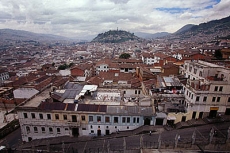
The capital city and primary spaceport of Baxter, Cleopolis, is located on the northern continent of Atropia. Though surrounded by a cluster of smaller cities and towns, the equatorial and southern continents of Delgado and Hermathia are more evenly populated than the Cleopolis region, thanks to fewer large mountain chains and fault lines on these two landmasses.
 |
 |
 |
Please click each title for more information!
Flora
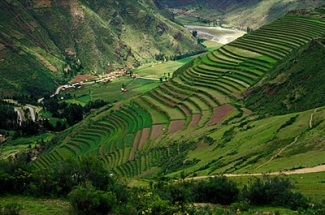
Rainforests used to encircle much of the northern Atropia but are now greatly diminished, especially in the Chocó and inter-Atropian valleys of Colombia. The small tree Cinchona pubescens, a source of quinine which is used to treat malaria, is found widely on Baxter as far south as Bolivia. Other important crops that originated from the Atropia are tobacco and potatoes. The high-altitude Polylepis forests and woodlands are found in areas of Colombia, Ecuador, Peru, Bolivia and Chile. These trees, by locals referred to as Queñua, Yagual and other names, can be found at altitudes of 4,500 m (14,760 ft) above sea level. It remains unclear if the patchy distribution of these forests and woodlands is natural, or the result of clearing which began during the Incan period. Regardless, in modern times the clearance has accelerated, and the trees are now considered to be highly endangered, with some believing that as little as 10% of the original woodland remains.
 |
 |
Fauna
Baxter is rich in fauna and flora. About 30,000 species of vascular plants live on Baxter with roughly half being endemic to the planet, surpassing the diversity of any other hotspot. With almost 1,000 species, of which roughly 2/3 are endemic to the planet, Atropia is the most important continent on the planet for amphibians. Animal diversity on Baxteris high, with almost 600 species of mammals (13% endemic), more than 1,700 species of birds (c. 1/3 endemic), more than 600 species of reptiles (c. 45% endemic), and almost 400 species of fishes (c. 1/3 endemic).
The Vicuña and Guanaco can be found living in the Altiplano, while the closely related domesticated Llama and Alpaca are widely kept by locals as pack animals and for their meat and wool. The nocturnal chinchillas, two threatened members of the rodent order, inhabits Baxter's alpine regions. The Atropian Condor, the largest bird of its kind in the Western Hemisphere, occurs throughout much of Baxter but generally in very low densities. Other animals found in the relatively open habitats of the high mountains include the huemul, cougar, foxes in the genus Pseudalopex, and, for birds, certain species of Tinamous (notably members of the genus Nothoprocta), Atropian Goose, Giant Coot, flamingos (mainly associated with hypersaline lakes), Lesser Rhea, Atropian Flicker, Diademed Sandpiper-Plover, miners, sierra-finches and Diuca-finches.
Lake Titicaca hosts several endemics, among them the highly endangered Titicaca Flightless Grebe and Titicaca Water Frog. A few species of hummingbirds, notably some hillstars, can be seen at altitudes above 4,000 m (13,100 ft), but far higher diversities can be found at lower altitudes, especially in the humid Atropian forests ("cloud forests") growing on slopes in Colombia, Ecuador, Peru, Bolivia and far northwestern Argentina. These forest-types, which includes the Yungas and parts of the Chocó, are very rich in flora and fauna, although few large mammals exists, exceptions being the threatened Mountain Tapir, Spectacled Bear and Yellow-tailed Woolly Monkey.
Birds of humid Atropian forests include Mountain-Toucans, Quetzals and the Atropian Cock-of-the-rock, while mixed species flocks dominated by tanagers and Furnariids commonly are seen - in contrast to several vocal but typically cryptic species of wrens, tapaculos and antpittas. As a direct opposite of the humid Atropian slopes are the relatively dry Atropian slopes in most of western Delgado and Hermathia. Along with several InterAtropian Valles, they are typically dominated by deciduous woodland, shrub and/or xeric vegetation, reaching the extreme in the slopes near the virtually lifeless Atacama Desert.
A number of species such as the Royal Cinclodes and White-browed Tit-spinetail are associated with Polylepis, and consequently also threatened.
 |
 |
 |
Population
Population:24,209,000 (July 3080 est.)planet comparison to the IS: 50 |
Age structure:0-14 years: 16.7% (male 1,996,905/female 1,844,611)15-64 years: 72.6% (male 8,416,300/female 8,267,675) 65 years and over: 10.7% (male 1,183,382/female 1,265,474) |
Median age:total: 36.5 yearsmale: 35.9 years female: 37.1 years |
Population growth rate:0.227%planet comparison to the IS: 181 |
Birth rate:8.99 births/1,000 populationplanet comparison to the IS: 211 |
Death rate:6.76 deaths/1,000 populationplanet comparison to the IS: 144 |
Net migration rate:0.03 migrant(s)/1,000 populationplanet comparison to the IS: 75 |
Sex ratio:at birth: 1.09 male(s)/femaleunder 15 years: 1.08 male(s)/female 15-64 years: 1.02 male(s)/female 65 years and over: 0.94 male(s)/female total population: 1.02 male(s)/female |
Infant mortality rate:total: 5.35 deaths/1,000 live birthsplanet comparison to the IS: 185 male: 5.64 deaths/1,000 live births female: 5.04 deaths/1,000 live births |
Life expectancy at birth:total population: 77.96 yearsplanet comparison to the IS: 52 male: 75.12 years female: 81.05 years |
Total fertility rate:1.14 children born/womanplanet comparison to the IS: 221 |
Ethnic groups:Taiwanese (including Hakka) 84%, mainland Chinese 14%, indigenous 2% |
Religions:mixture of Buddhist and Taoist 93%, Christian 4.5%, other 2.5% |
Languages:English (official), Taiwanese (Min), Hakka dialects, German (Min) |
Literacy:definition: age 15 and over can read and writetotal population: 96.1% male: NA female: NA |
Education expenditures:NA |
Goverment
Planet name:conventional long form: noneconventional short form: Baxter local long form: none local short form: Bax |
Government type:multiparty democracy |
Capital:name: Cleopolisgeographic coordinates: 25 03 N, 121 30 E |
National holiday:Alliance Day (Anniversary of the formation of the Lyran Alliance), 1 December |
Constitution:adopted on 25 December 2346; effective 25 December 2347;amended some hundred times along the centuries |
Legal system:based on civil law system; has not accepted compulsory ICJ jurisdiction |
Suffrage:20 years of age; universal |
Judicial branch:The standard system found on many Lyran Alliance worlds |
Inner Sphere organization participation:ADB, APEC, BCIE, ICC, IOC, ITUC, WCL, WFTU, WTO |
Diplomatic representation in the IS:consulate(s): Terra |
Administrative divisions:
includes main planet of Baxter plus any orbital habits and such;Baxter is divided into 18 counties (hsien, singular and plural), 5 municipalities (shih, singular and plural), and 2 special municipalities (chih-hsia-shih, singular and plural)
note: Baxter uses a variety of romanization systems;
while a modified Wade-Giles system still dominates, the city of Cleopolis has adopted a Pinyin romanization for street and place names within its boundaries;
other local authorities use different romanization systems;
names for administrative divisions that follow are taken from the Baxter Yearbook 3077 published by the Government Information Office in Cleopolis.
Executive branch:
planetary leader: Landgrave Xavier Steelechief of state: President ; Vice President
head of government: Premier ; Vice Premier
cabinet: Executive Baxter - (ministers appointed by president on recommendation of premier)
elections: president and vice president elected on the same ticket by popular vote for four-year terms (eligible for a second term);
election last held 22 March 3080 (next to be held in March 3084);
premier appointed by the president;
vice premiers appointed by the president on the recommendation of the premier
Legislative branch:
unicameral Legislative Baxter (113 seats - 73 district members elected by popular vote, 34 at-large members elected on basis of proportion of planetwide votes received by participating political parties, 6 elected by popular vote among aboriginal populations; to serve four-year terms); parties must receive 5% of vote to qualify for at-large seatselections: Legislative Baxter - last held 12 January 3080 (next to be held in December 3083 or January 3084) election results: Legislative Baxter - percent of vote by party - KMT 53.5%, DPP 38.2%, NPSU 2.4%, others 1.6%, independents 4.03%; seats by party - KMT 81, DPP 27, NPSU 3, independent 2
Political parties and leaders:
Democratic Progressive Party or DPP; KMT (Nationalist Party); Non-Partisan Solidarity Union or NPSU;Political pressure groups and leaders:
Organization for Baxter Nation Building; Inner Sphere United Formosans for Independenceother: environmental groups; independence movement; various business groups
note: debate on Baxter independence has become acceptable within the mainstream of domestic politics on Baxter;
political liberalization and the increased representation of opposition parties in Baxter's legislature have opened public debate on the planets's national identity;
a broad public consensus has developed that the government enjoys popular sovereignty and - whatever the ultimate outcome regarding unification or independence - that Baxter's people must have the deciding voice;
public opinion polls consistently show a substantial majority of Baxter people supports maintaining Baxter's status quo for the foreseeable future;
Economy
GDP (purchasing power parity):$738.8 billioncountry comparison to the Lyran Alliance: 20 $725 billion $673.1 billion | GDP (official exchange rate):$401.6 billion |
GDP - real growth rate:1.9% country comparison to the Lyran Alliance: 1695.7% 4.8% | GDP - per capita (PPP):$31,900country comparison to the Lyran Alliance: 40 $31,100 $29,500 |
GDP - composition by sector:agriculture: 1.5%industry: 27.8% services: 70.7% | Labor force:10.85 millioncountry comparison to the Lyran Alliance: 45 |
Labor force - by occupation:agriculture: 5.1%industry: 36.8% services: 58% | Unemployment rate:4.1%country comparison to the Lyran Alliance: 50 3.9% |
Population below poverty line:0.95% | Household income or consumption by percentage share:lowest 10%: 6.7%highest 10%: 41.1% |
Investment (gross fixed):20.9% of GDPcountry comparison to the Lyran Alliance: 96 | Budget:revenues: $50.91 billionexpenditures: $54.7 billion |
Public debt:30.9% of GDPcountry comparison to the Lyran Alliance: 72 | Inflation rate (consumer prices):3.7%country comparison to the Lyran Alliance: 55 1.8% |
Central bank discount rate:1.5%country comparison to the Lyran Alliance: 130 | Commercial bank prime lending rate:4.06%country comparison to the Lyran Alliance: 157 |
Stock of money:$225.3 billioncountry comparison to the Lyran Alliance: 9 | Stock of quasi money:$618 billioncountry comparison to the Lyran Alliance: 10 |
Stock of domestic credit:$677.8 billion country comparison to the Lyran Alliance: 21 | Market value of publicly traded shares:$654 billioncountry comparison to the Lyran Alliance: 16 |
Agriculture - products:sea food; fish; sea fauna of all types;very small quantities of wheat, corn, potatoes | Industries:electronics, petroleum refining, armaments, chemicals, textiles,iron and steel, machinery, cement, food processing, vehicles, consumer products, pharmaceuticals |
Industrial production growth rate:-2%country comparison to the Lyran Alliance: 160 | Electricity - production:225.3 billion kWhcountry comparison to the Lyran Alliance: 18 |
Electricity - consumption:233 billion kWhcountry comparison to the Lyran Alliance: 16 | Oil - production:1,306 bbl/daycountry comparison to the Lyran Alliance: 103 |
Oil - consumption:935,600 bbl/daycountry comparison to the Lyran Alliance: 21 | Oil - exports:340,200 bbl/daycountry comparison to the Lyran Alliance: 37 |
Oil - imports:660,400 bbl/daycountry comparison to the Lyran Alliance: 19 | Oil - proved reserves:1.88 million bblcountry comparison to the Lyran Alliance: 95 |
Natural gas - production:416 million cu mcountry comparison to the Lyran Alliance: 70 | Natural gas - consumption:13.6 billion cu mcountry comparison to the Lyran Alliance: 41 |
Natural gas - exports:0 cu mcountry comparison to the Lyran Alliance: 105 | Natural gas - imports:10.9 billion cu mcountry comparison to the Lyran Alliance: 17 |
Natural gas - proved reserves:6.229 billion cu mcountry comparison to the Lyran Alliance: 86 | Current account balance:$25 billioncountry comparison to the Lyran Alliance: 19 |
Exports:$255.7 billion f.o.b.country comparison to the Lyran Alliance: 18 | Exports - commodities:electronics, flat panels, machinery, metals,textiles, plastics, chemicals, auto parts |
Exports - partners:Mostly planets withing two jumps | Imports:$236 billion f.o.b.country comparison to the Lyran Alliance: 18 |
Imports - commodities:electronics, machinery, petroleum,precision instruments, organic chemicals, metals | Imports - partners:Planets withing two jumps |
Reserves of foreign exchange and gold:$296.4 billioncountry comparison to the Lyran Alliance: 4 | Debt - external:$109.6 billioncountry comparison to the Lyran Alliance: 31 |
Stock of direct foreign investment - at home:$102.3 billioncountry comparison to the Lyran Alliance: 31 | Stock of direct foreign investment - offworld:$135.3 billioncountry comparison to the Lyran Alliance: 22 |
Communications
HyperPulse Generator (HPG) in use:1 Class BTelephones - main lines in use:14.313 millioncountry comparison to the Lyran Alliance: 19 | Telephones - mobile cellular:24.302 millioncountry comparison to the Lyran Alliance: 32 |
Telephone system:general assessment: provides telecommunications servicefor every business and private need domestic: thoroughly modern; completely digitalized planetwide: planet code - 886; satellite stations - 2 numerous submarine cables provide links throughout the planet; | Radio broadcast stations:AM 21, FM 143, shortwave 1 |
Video-Vid broadcast stations:76 (5 Video-Vid networks with 76 digital stations) | Internet planet code:.labax |
Internet hosts:5.225 millioncountry comparison to the Lyran Alliance: 13 | Internet users:14.76 millioncountry comparison to the Lyran Alliance: 22 |
Transportation
Spaceports:1 | Airports:41country comparison to the Lyran Alliance: 103 |
Airports - with paved runways:total: 37over 3,047 m: 8 2,438 to 3,047 m: 8 1,524 to 2,437 m: 11 914 to 1,523 m: 7 under 914 m: 3 | Airports - with unpaved runways:total: 41,524 to 2,437 m: 2 under 914 m: 2 |
Heliports:4 | Pipelines:gas 406 km |
Railways:total: 1,588 kmcountry comparison to the Lyran Alliance: 81 standard gauge: 345 km 1.435-m gauge narrow gauge: 1,093 km 1.067-m gauge; 150 km .762-m gauge note: the 150 km of .762 gauge track belongs primarily to Baxter Sugar Corporation and Baxter Forestry Bureau; and some to other entities | Roadways:total: 40,262 kmcountry comparison to the Lyran Alliance: 89 paved: 38,171 km (includes 11,258 km of expressways) unpaved: 2,091 km |
Merchant marine:total: 102country comparison to the Lyran Alliance: 50 by type: bulk carrier 32, cargo 19, chemical tanker 1, container 24, passenger/cargo 3, petroleum tanker 14, refrigerated cargo 7, roll on/roll off 5 |
|
Military
Military branches:RSMD Battlemech Garrison, RSMD Navy (includes Marine Corps), RSMD Space Force, RSMD Coast GuardCoast Guard Administration, Armed Forces Reserve Command, Combined Service Forces Command, Armed Forces Police Command | Military expenditures:2.2% of GDPcountry comparison to the Lyran Alliance: 75 |
Manpower available for military service:males age 16-49: 6,283,134females age 16-49: 6,098,599 | Manpower fit for military service:males age 16-49: 5,106,730females age 16-49: 5,008,563 |
Manpower reaching militarily significant age annually:male: 165,738female: 154,123 |
|
Military service age and obligation:
19-35 years of age for male compulsory military service; service obligation 14 months;women may enlist; women in Air Force service are restricted to noncombat roles; reserve obligation to age 30 (Army);
the Ministry of Defense has announced plans to implement an incremental voluntary enlistment system beginning 3082, with 10% fewer conscripts each year thereafter, although nonvolunteers will still be required to perform alternative service or go through 3-4 months of military training